
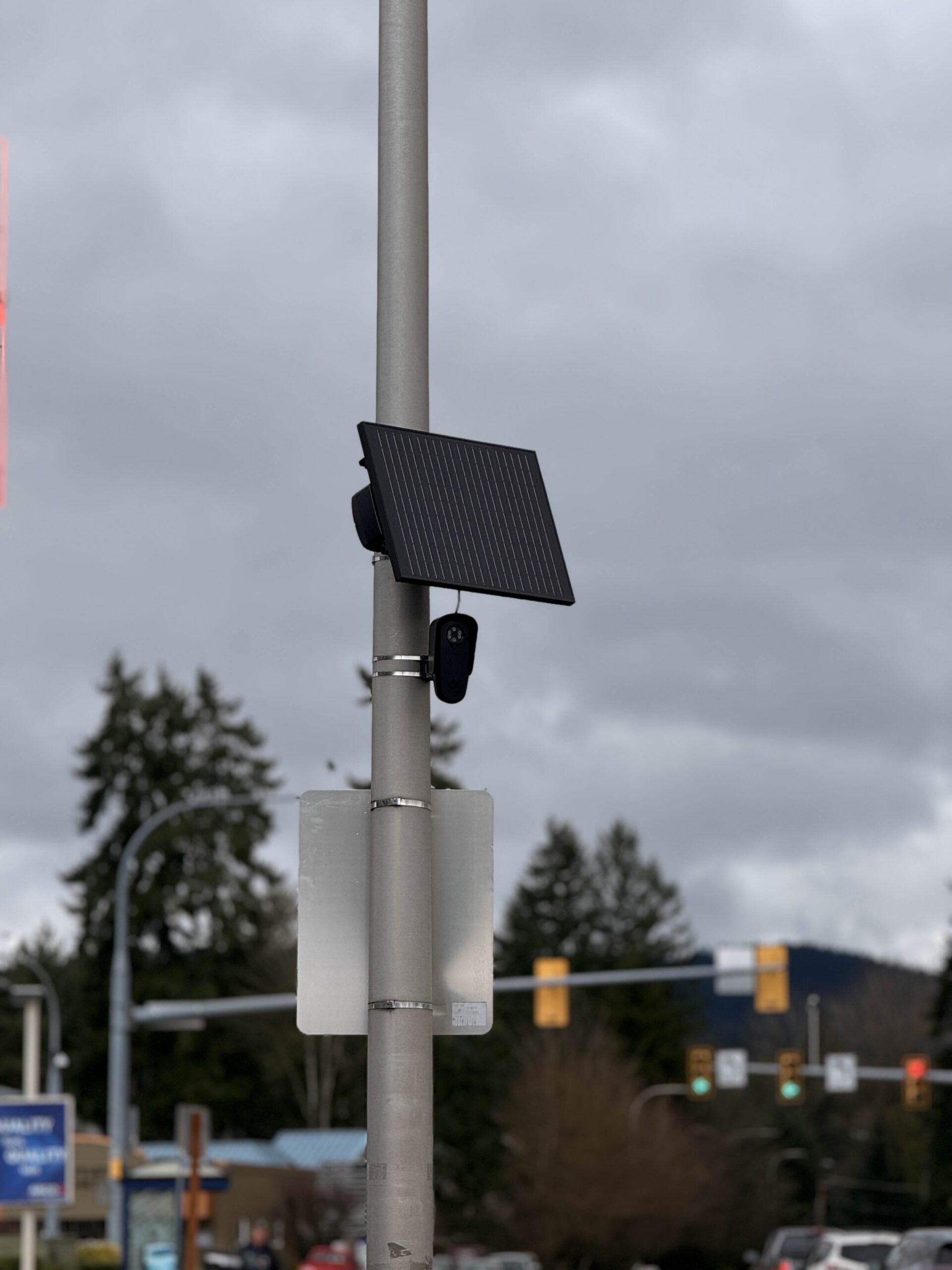
Renton, WA— The Renton City Council voted Monday night to once again pause the city’s use of Flock cameras, a system that automatically photographs and records the license plate of every car that drives past.
The 4-3 vote at the May 4 meeting came after some back-and-forth among council members, who weighed concerns about privacy and the safety of Renton’s immigrant communities against the cameras’ role in solving violent crimes.
A bumpy timeline
This isn’t the first time Renton has hit pause on the cameras. They were first turned off on March 31. On April 6, Police Chief Jon Schuldt told the Committee of the Whole the cameras would stay off until the department could meet new state compliance rules. Then, on April 21, they were switched back on— a move that caught some council members off guard.
“I do agree that they were on all of a sudden and we didn’t have input as a council,” said Councilmember McIrvin.
The motion
Councilmember Rivera introduced the motion to pause the cameras, seconded by Councilmember Văn. Rivera said she wanted to give the city more time to gather public feedback.
During public comment, a librarian with a background in technology raised concerns about whether the camera data could be reached by bad actors, and whether it was truly being deleted as promised.
Rivera said she supports law enforcement tools that help reduce conflict, but added that she “hates ‘big brother,'” a nod to George Orwell’s novel 1984.
She also raised a difficult question: if Flock cameras can help find missing children, could they also be used to track immigrant children?
“That is a really uncomfortable conversation we have to have, right, because now we’re weighing the needs of which children are more important,” Rivera said. “When I see what’s happening, I’ve given real pause for what it means for all children.”
Worries about immigrant communities
Several council members said they were thinking about Renton’s immigrant and refugee residents.
“The risk here is way more than the benefit for our communities of immigrants and refugees,” said Councilmember Văn, who also referenced a University of Washington human rights report. She added that she would prefer to shut the cameras down entirely, but a pause was acceptable for now.
Council President Pérez said many immigrants carry fears that come from their experiences before they arrived in the United States.
“It’s not just because of what they have heard, it’s what they have experienced in their own home countries,” Pérez said. She added that she sees trust in the Renton Police Department, but “there still is a lot of fear of this new technology”— a fear, she said, that she shares as someone who is wary of “big brother” herself.
A different view
Not everyone on the council saw it the same way. Councilmember Alberson pushed back on the pause, arguing that decisions should be based on what is likely to happen, not on worst-case scenarios.
“If we start to make decisions based on something that is possible, we won’t make a decision on anything,” Alberson said. “We have to go where the probability is.”
Alberson said he understood the fear was real, but worried it was being “amplified in an unfair manner.” He pointed out that no matter what safeguards are put in place, some people will always feel they aren’t enough.
“There are always going to be bad actors out there. We cannot make a decision on a bad actor, five bad actors. The needs of the many outweigh the needs of the few.”
Councilmember McIrvin landed somewhere in between. He told the council his own family had been the victim of a carjacking, exactly the kind of crime where Flock data could help. He said he supports keeping the technology, but is fine with a pause to allow more conversation.
“I do think we need this technology,” McIrvin said, adding he wants it used “if it’s done right.”
What the police said
Commander Hassinger, who leads investigations for the Renton Police Department, walked the council through how the system actually works in practice.
Right now, she said, RPD uses Flock data mostly for felony crimes. Under the new state law, certain gross misdemeanors qualify too, but officers must tie any search to a specific case.
“Immigration is not anything at all per policy that we share information or we would even do a search on,” Hassinger said.
She explained that searches are tied to vehicles, not people: an officer must be looking for a specific license plate or vehicle description. Data is now kept for only 21 days before being purged. Every search requires supervisor approval, and any request from another city must clear the same review. Other cities can only access Renton’s data if they follow the same state-required audits and controls.
Hassinger said Flock data has helped Renton solve multiple homicides, including a case where a woman was abducted and taken to Mexico. In another case, investigators were able to use the data to determine that a death first not considered as a homicide was determined to be one with the aid of the information.
“There are many cases, had we not had that information, we wouldn’t have a place to look for additional evidence,” she said. “I understand the fear, because other states, other regions in the nation where it has been misused. That would be a gross misdemeanor if it’s used now, and we have accountability measures in place.”
How the council voted
The motion passed 4-3.
Yes: Council President Pérez, Councilmembers McIrvin, Rivera, and Văn
No: Councilmembers Prince, O’Halloran, and Alberson
The cameras will remain off while the council gathers more information. No firm date has been set for when they will come back online.